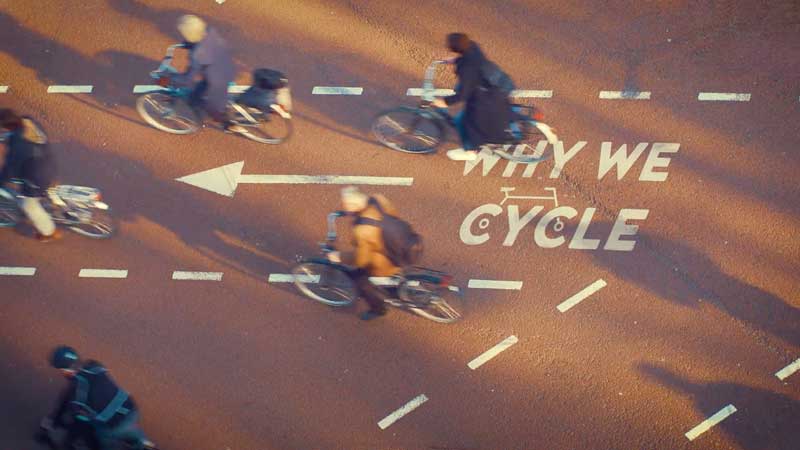
screenshot of the documentary Why we cycle

A Coupled Infrastructure Perspective on Cycling

I recently saw the Dutch documentary Why we cycle which provides an integrated perspective of the role of cycling in Dutch society. Not only allow cycling people to go from A to B in a densely populated

Learning how to learn

Just finished a great book by Barbara Oakley on how to learn to learn. As I experience as a professor teaching courses that students consider to be difficult, many students do not know how to study

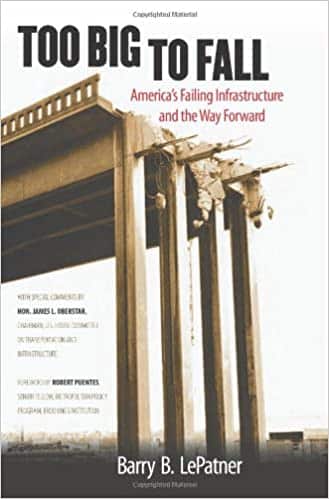
Bridge maintenance as a collective action problem

On July 19th a bridge collapsed on the I-10 that connects Phoenix with Los Angeles. Heavy rain caused flash flooding which eroded the eastbound bridge to give way. As a consequence the I-10, the main

Who rules the world?

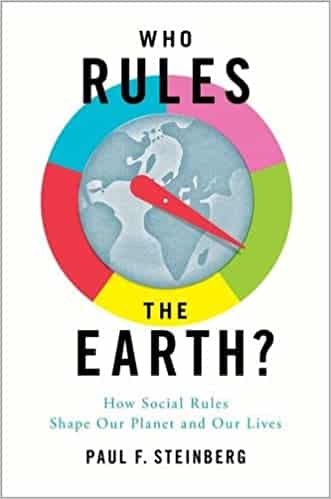
The new book of Paul Steinberg, a professor of Political Science and Environmental Policy at Harvey Mudd College, is entitled Who Rules the Earth? The book is an engaging discussion on how rules rule our lives

Eco: how to save the world?

In my previous post I lamented the lack of resource dynamics in (video) games. Some of you let me know about resource constraints in some games, but many of you recognized the lack of ecological

Resource dynamics in video games

During the recent winter break I got introduced by some younger family members to Clash of Clans and Boom Beach, which are strategy games you can play on your ipad or other devices. You make

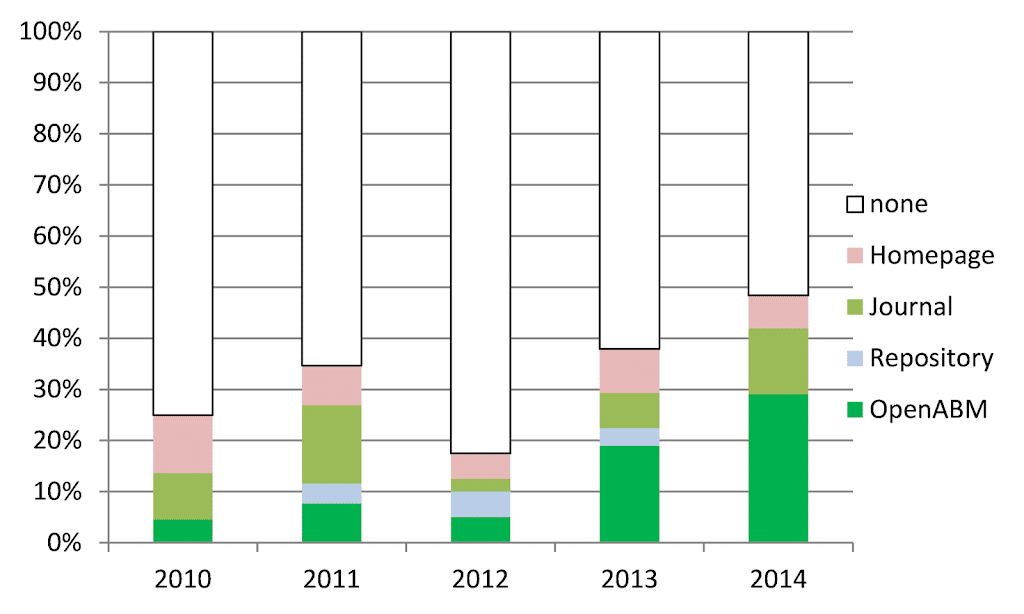
Archiving practice for model code of agent-based models

There is increasing concern over the repeatability and reproducibility of computational science (see also here, here, here, here and here). If computational scientific enterprises want to be accumulative more transparency is required including the archiving

The re-emergence of the roving bandit

Mancur Olson introduced the concept of roving and stationary bandits to explain why dictators – stationary bandits – have a self-interest to the society they rule productive to maximize the rent they can collect from

The biology of trust

The book “The moral molecule” by Paul Zak is a great book discussing the research on the relation between oxytocin and decision making. Using the trust game and measurements of oxytocin in the blood before

Legacy of Lin

It is today a year ago that Lin Ostrom died. During the last year many memorials, obituaries, special issues, awards, scholarships etc. have been produced or are in preparation. This is testament to the influence

Inappropriate Appropriation in Academia

Knowledge is a public good, at least this is typically mentioned. However, academia as a knowledge enterprise experience a lot of problems of inappropriate behavior. As a Dutch citizen the recent cases of Dutch social

The price of inequality

The latest book of Nobel Laureate economist Joseph Stiglitz is a brilliant discussion of some of the fundamental problems in most societies. He shows how the 1% have created institutional arrangements to derive and maintain

Inequality and collective action

In our asymmetric commons dilemma game (irrigation games) we do in the lab and in the field we find that trust and inequality are driving factors that explains the results. The initial trust in others

Will winning the Euro Cup by Greece save the Euro?

The Euro Cup 2012, the European Championship of Football, starts June 8 in Warsaw (Poland) with a match between Poland and Greece. 16 countries will fight for the European Championship. This tournament (which will end

The Pressure on Rio+20

Last week I attended the Planet under Pressure conference in London. The conference was great and extremely well organized with 3000 participants and more than 3000 unique viewers a day to the streaming videos. One

The anthill Venice

As I am wandering through the streets of Venice – I am here for a workshop – the image of Venice as an anthill pops up. The men who collect small bags of waste in

Behavioral Economics in Practice

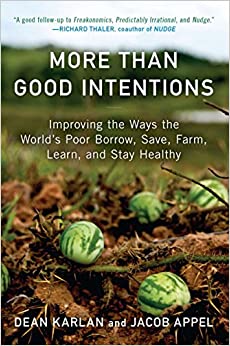
The book by Dean Karlan and Jacop Appel is called “More than Good Intentions” discuss the use of randomized control trials in developing countries to test which kind of interventions are more effective. The book

Green Revolution

Yesterday attended a very interesting talk of Carlo Jaeger who gave a seminar in our School of Sustainability. He presented a long term view and systems analysis of the financial crises and this led to

The tragedy of a common currency

The current crisis of the Euro emphasizes some basic lessons from the study of resilience of dynamic systems. Attributes of complex systems that enhance resilience are diversity, redundancy and modularity. There is a cost of

The fragility of successful social-ecological systems

One of the typical examples of self-governance of the commons are small-scale irrigation systems all around the world who exist for hunderds of years and sometimes even more than a thousand years. They are highly

Narcissism and Collective Action

I read ”The Narcissism Epidemic” by Jean Twenge and Keith Campbell who describe the increasing trend of narcissism in our society. The way children are raised, being special, being a princess, getting everything they want,

Remote sensing of energy inefficient houses

How do you know whether your house is energy efficient. Well one options is to measure this by heat maps that illustrate the waste of heat to the surrounding areas. Geoffrey Hay and colleagues published

Consumers: Organize yourselves to change the world

My new research direction aims to build on the insights from small scale experiments to address global sustainability problems. We know that communities are very effective in solving collective action problems in the right conditions.

Science conferences and Sustainability

We just finished the Resilience 2011 conference here in Tempe, Arizona. About 700 people participated in this successful event. Efforts have been made to take sustainability in practice: The meeting was held in a LEED

Collective action in Chile

I had a wonderful holiday in Chile over the winter break, and with my institutional analysis lens I observed some interesting institutional arrangements. I like to mention three of them. Each house has a trash

Collective action among scientists

Recently I got involved in various activities who all have in common to improve collective action among scientists, especially social scientists who work on collective action. This might be a bit awkward, but social scientists

Anasazi on the run

In the latest edition of Ecology and Society I published a paper on an agent-based model that aims to understand the resilience of ancient societies in the American South-west. Many of those societies have dissappeared

Content of communication not a predictor of cooperation

Earlier this month a new paper appeared of myself in Ecology and Society. The paper discussed earlier experiments than the recent Science paper and focused on the content analysis of communication. Thousands of lines of

Working Together

Earlier this month the book that I wrote with Amy Poteete and Elinor Ostrom got published with Princeton University Press. We started this book project around 2004 when Lin Ostrom suggested to bring together the

Science paper

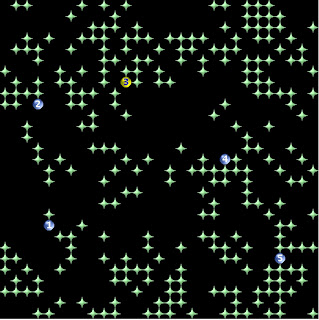
In the Science edition of April 30, a paper of mine appeared on my work on experiments of social-ecological systems. We introduce our experimental environment (see a screenshot in the Figure) that includes relevant ecological

Equity versus Efficiency

From experimental research and case studies we are doing at CSID during the last few years we find that there are interesting interactions between equity and efficiency. Many small scale irrigation systems function very well

Public good provision and behavioral research

While the negotiators gather in Copenhagen to get an agreement on a global policy of climate change, it is time to reflect on some insights what leads to behavioral change. Increasingly there are insights from

Climate Policy from the bottom up

In a few weeks world leaders, NGOs and scientists gather in Copenhagen for the UN Climate Change conference. Already is clear the no effective agreement will be signed. One may get quite depressed by the

Nobel recognition for the study of institutional diversity

We are very excited that our colleague Lin Ostrom receives the Nobel Prize in Economic Sciences. This is a tremendous recognition for the hard interdisciplinary and multi-method endevour she and her husband Vincent have pioneered

Individual Property Rights as Panaceas

In the editorial of Science (14 August) Akin Mabogunje, chairman of the Foundation for Development and Environmental Initiatives, proudly discussed the progress made in land reform in Africa, Nigeria in particular. Using “the best available

Paul Romer sheds light on rules and development

In a great talk, economist Paul Romer proposes an interesting idea to create places of innovation and development. By the creation of charter cities, who have specifically defined rules and goals, new cities can be

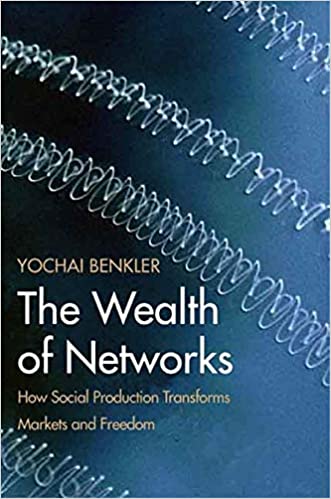
The Wealth of Networks Book Cover

Governing the digital commons

Yochai Benkler wrote the wonderful book “The Wealth of Networks” which discusses various consequences of the increasing use of internet and other digital processes in economic development, creative production and politics. In the past mass

Good intensions

Giving aid is a difficult dilemma. A Samaritan’s dilemma. There are different ways to help the poor in developing countries. Beyond Good Intensions provides a series of videos from aid projects all over the world

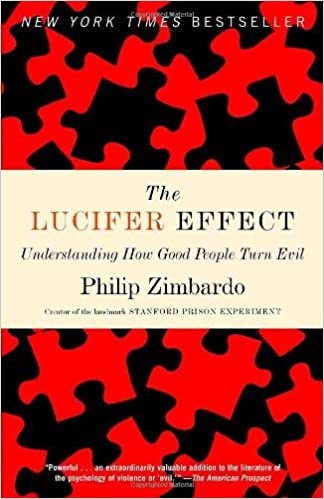
Book Cover of The Lucifer Effect

Institutional context and how good people turn evil

Philip Zimbardo, an emeritus professor of social psychology from Stanford University, did in the early seventies a famous experiment where a group of young men randomly were assigned to be prisoner or guard. The Stanford

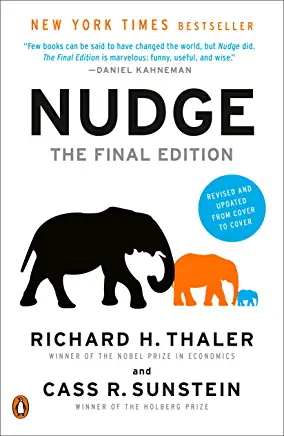
Nudge Book Cover

Nudging

An interesting book of 2008 is Nudge by behavioral economist Richard Thaler and legal scholar Cass Sunstein. Based on behavioral studies they discuss incentives structures for many different topics. Thaler and Sunstein introduce the term

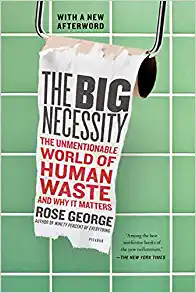
Sh** happens

The big necessity by Rose George is an unusual book since it discusses the details of how human societies deal with human waste. 2.6 billion people have nowadays no form of sanitation which has immense

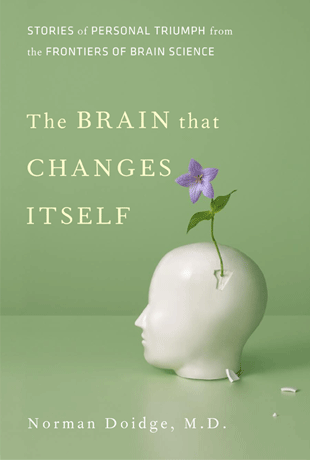
Plastic brains

Just finished “The brain that changes itself” of Norman Doidge which discuss new developments in brain research. Mainly the findings that brains can adapt to lost functions. Many examples are discussed of people who lost

The benefits of theft

Stealing somebody’s property is illegal, but sometimes it has benefits and is tolerated. Within the increasing digital world copying software and other digital products is easy to do. The Economist of July 19th discusses some

Evidence-based Policy-making

In the May 24 edition of the New Scientist there is an article on the use of objective statistical analysis to investigated the effectiveness of policies, evidence-based policy similar to evidence-based medicine. Using randomized tests

Predictably irrational

I just finished a fantastic book by Dan Ariely of MIT on Predictably Irrational: The Hidden Forces that Shape our Decisions. The book describes a large number of experiments in behavioral economics and psychology how

The rules of gangs

A great book on the political economy of gangs is written by Sudhir Venkatesh in “Gang Leader for a Day”. In this book Sudhir reports on his adventures as a Chicago graduate students studying the

Language and Institutions

In the edition of January 22 of PNAS Steven Pinker and colleagues discuss the “logic of indirect speech”. “When people speak, they often insinuate their intent indirectly rather than stating it as a bald proposition.”

The tragedy of the commons in evolutionary biology

In the December issue of Trends in Ecology and Evolution, Daniel Rankin, Katja Bargum and Hanna Kokko from Finland review some fascinating recent research on the study of commons dilemmas in non-human context such as

Cooperation with ingroup and outgroup persons

In a paper in te October 26 edition of Science by Jung-Kyoo Choi and Sam Bowles, entitled “The Coevolution of Parochial Altruism and War”, they discuss the interesting dilemma why people cooperate with members of

Genetics and Ultimatum Game

This week two interesting papers appeared who had unusual design to study fairness by using ultimatum games. In the Proceedings of the National Academy of Sciences USA of October 2, Björn Wallace and his colleagues

Why conservation efforts often fail

Modern conservation techniques have brought us the resurgence of American bald eagles, sustainable forest harvests, improved water quality of rivers and the rescue of prized lobster fisheries. So how can modern conservation strategies also have


The cover article of Science of July 27 is about the research potential of virtual worlds. It is written by William Sims (!!) Bainbridge, who is a program officer at the National Science Foundation. The

cooperation and big brother

Manfred Milinski and Bettina Rockenbach report in a recent perspective article in Science on the impact of feeling being watched on cooperation in social dilemmas. Even when images of eyes are used in the experimental

Can we trust avatars?

Kristine Nowak and Christian Rauh of the University of Connecticut wrote an interesting paper where they describe an experiment to test how people perceive the trustworthiness of avatars. Volunteers where chatting and they were represented

Not by genes alone

Has evolution led to humans with hard-wired decision algorithms, or is striking cooperative arrangements in human societies a consequence of cultural processes? This is the main struggle Richerson and Boyd (2005) deal with. Probably humans

Welcome to CSID blog

We are still in the starting phase of building up the Center for the Study of Institutional Diversity but now we have Ann Evans started as our coordinator and have Amber Wutich and Abby York